IMF Reaches Staff Level Agreement on the Fifth Review of the Extended Credit Facility for Ethiopia
Published: June 3, 2026
- IMF staff and the Ethiopian authorities have reached staff-level agreement on economic policies to conclude the fifth review of the four-year US$3.4 billion ECF arrangement. Once approved, Ethiopia will gain access to about US$468 million.
- Despite sharp increases in the price of key imports caused by the war in the Middle East, economic activity remains robust, with only modest impacts on output growth and consumer price inflation.
- Maintaining positive macro momentum will require continued effort to strengthen foundations for private sector-led growth and adroit responses to emerging challenges.
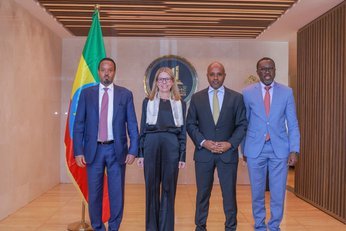
Washington, DC: A staff team from the International Monetary Fund (IMF) led by Mr. Alvaro Piris, visited Addis Ababa during May 6 – 20, 2026, to hold discussions on the fifth review under the IMF’s Extended Credit Facility (ECF). Discussions continued virtually since. The ECF arrangement was approved by the IMF Executive Board on July 29, 2024, for an initial total amount of SDR 2.556 billion (about US$3.4 billion at that time). Subject to approval by the IMF Executive Board, the fifth review will make available about US$468 million (SDR342.05 million), bringing total IMF financial support under the ECF arrangement so far to about US$2,651 million (SDR1,939.5 million).
Today, Mr. Piris issued the following statement:
“The IMF staff team and the Ethiopian authorities have reached staff-level agreement on the fifth review of Ethiopia’s economic program under the ECF arrangement. The agreement is subject to the approval of IMF management and the Executive Board in the coming weeks.
“The authorities have continued to make progress in implementing their Homegrown Economic Reform Agenda, with favorable macroeconomic outcomes through to the onset of the war in the Middle East. Output indicators, exports, reserves, and government revenue all continued to improve through early 2026, alongside declines in inflation. The war in the Middle East was a significant external shock that disrupted trade, causing temporary fuel shortages and sharp increases in the price of imported fuel and fertilizer. Even so, economic activity appears robust, with as-yet modest impacts on output growth and consumer price inflation.
“Nonetheless, risks to the economic outlook have risen. Global uncertainty has increased since the onset of the war in the Middle East and the resulting high commodity price volatility. While pressures on growth, external and domestic balances, and inflation are expected to remain moderate if the shock is not prolonged, higher costs for essential imports and the volatile environment call for adroit responses to emerging challenges and careful management of resources to preserve the capacity to respond should the shock prove more persistent.
“Maintaining strong policy implementation will be essential to consolidate macroeconomic stability. A tight monetary policy stance remains warranted to anchor inflation expectations. Further efforts to enhance the functioning and transparency of the foreign exchange market will be important to support external adjustment. Continued progress in domestic revenue mobilization and prudent expenditure management will help safeguard fiscal sustainability while responding to new spending pressures.
“Advancing structural reforms will remain key to unlocking higher private sector-led growth. Priorities include improving the business climate, strengthening financial sector resilience, and deepening market reforms to foster competition and efficiency.
“Good progress continues to be made toward securing a comprehensive external debt treatment that will restore debt sustainability. Debt restructuring discussions with official creditors are advancing in line with expectations, and discussions with bondholders continue.
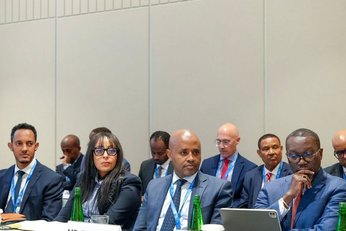
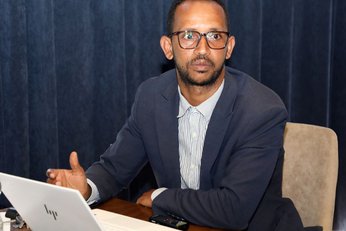
“The staff team thanks the authorities for their strong cooperation and for their continued commitment to the success of the IMF-supported program. The mission met with Minister of Finance Ahmed Shide, National Bank of Ethiopia Governor Eyob Tekalign, and other senior officials, as well as with representatives of the private sector and development partners.”